
The Door Is Open. So Why Are We Still Living in Financial Chaos?
What if the financial prison we’ve been praying to escape has an open door, but we’re afraid to walk through it?
If you have been like me, sometimes we feel we are staring at concrete walls, restricting us like in a prison cell with suffocating feelings of panic that we will never have enough.
From the bills we avoid opening to the financial conversations we keep postponing, we are under constant pressure to make everything work. We’ve spent so long living in a financial crisis that we’ve forgotten what it feels like to live outside of one.
Somehow, we’ve learned to function inside the chaos we have become used to inadvertently being comfortable within those barriers. But here’s an uncomfortable question I caught myself asking:
Have we become so comfortable surviving financial chaos that financial Peace now feels like Panic?
When Survival Becomes Comfortable
After almost 5 years of caregiving for my husband through multiple spinal fusions beginning only 35 days after our wedding, I’m experiencing this in real time. He encountered a divine miracle release of pain a few months ago, allowing him to have an appetite again, being able to drive himself, and even back to enjoying cooking for our massive blended family. Yet I’m discovering very personally that learning to live beyond survival takes intentional work, too.
Many of us know what it’s like to survive a divorce, a layoff, an illness, or years of unexpected financial responsibilities. We became resourceful, learned how to anticipate problems and we figured out how to keep going when everything felt uncertain.
But the strategies that helped us survive may not be the same ones that will help us rebuild.
When Avoidance Feels Like Peace
A 2024 study published in the Journal of Financial Therapy, titled Do Ostriches Worry Less?, examined people who avoided information about their retirement savings needs.
Researchers found that greater avoidance was associated with a higher likelihood of reporting no retirement worry.
If we think about that, it reveals that sometimes avoiding what makes us uncomfortable can feel like relief, even when the underlying problem remains.
Maybe that’s why we delay checking the bank account, postpone creating a financial plan or why we promise ourselves we’ll address our finances when life finally settles down. Even though there is an open door of relief right in front of us. We stay frozen in our comfort of the familiar chaos.
And we’re certainly not alone.
The FINRA Foundation’s 2024 National Financial Capability Study found that 63% of respondents experienced anxiety when thinking about their personal finances. Among respondents with financially dependent children, that figure reached 70%.
Financial anxiety is real. But temporary relief from avoiding money isn’t the same as financial peace. Have you ever felt this way? Think of a time where familiarity didn’t necessarily feel safe. Because sometimes there is a deeper financial trauma that has imprinted itself into our nervous system we haven't thought about in years. It can be silently holding us in panic within those concrete walls.
The Prison Door Is Already Open
While studying 1 Corinthians 15:10, Paul’s words challenged me:
“But by the grace of God I am what I am: and his grace which was bestowed upon me was not in vain…” (KJV)
Paul recognized God’s grace in his life. But he didn’t stop at recognizing it. He responded through his work, while acknowledging that God’s grace was working with him.
That morning, I wrote a question in my journal:
“It is by God’s Grace I have been set Free, But Why do I not leave?”
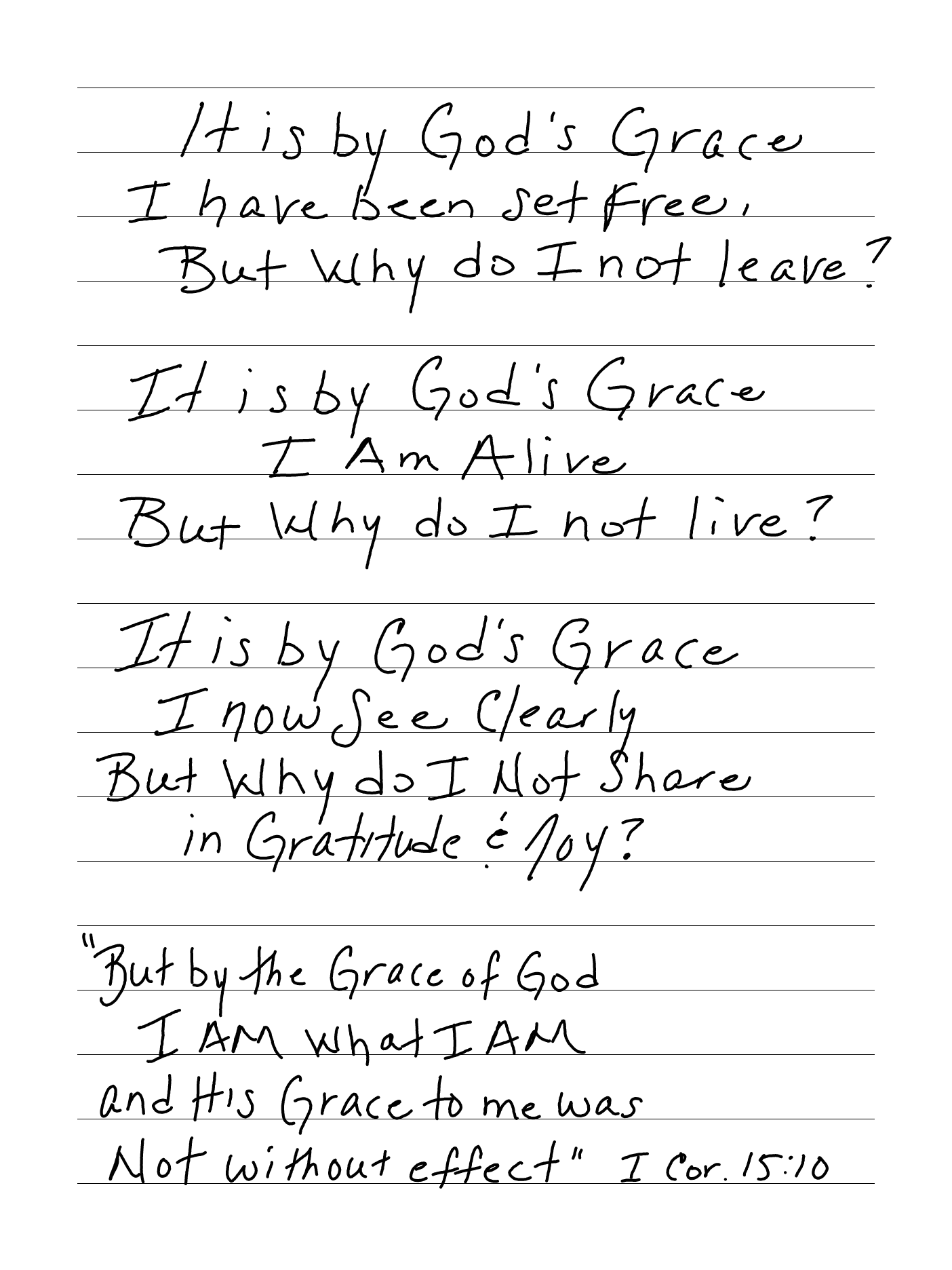
I was journaling, thinking through the Grace of my husband’s recent miracle relief from the pain that allowed me the breath I had been praying for to work again, to finish writing my book, to speak at conferences again, to financially pay off all the medical and support debt that had accrued from surgery after surgery. But later that evening, the question I wrote down became even more uncomfortable.
Why do we remain inside prisons when the chains have been removed and the door stands wide open?
Perhaps like me, you’ve become familiar with the walls of financially surviving. We know how to survive within their boundaries. But outside those walls? We may have to make decisions we’ve never made, have conversations we’ve avoided, trust ourselves to begin again and open up our hearts to face the possibility of disappointment.
The Israelites experienced something similar. In Exodus 14:12, after being delivered from Egypt, they told Moses they would have preferred remaining in servitude rather than facing death in the wilderness. Their fear of an uncertain future made familiar captivity seem preferable.
Sometimes the fear of unfamiliar freedom feels greater than the discomfort of familiar captivity.
But that doesn’t mean we have to remain there.
Courage Doesn’t Require the Absence of Fear
How often do we wait to feel financially confident before taking action?
We wait until we earn more, until our debt is smaller or my favorite, until life becomes predictable. But what if confidence begins developing through the very decisions, we’re afraid to make? We don’t have to feel fearless to begin, we need a way to respond to fear without allowing it to make every decision.
Feeling that fear within myself, I walked myself through the scripture-based framework I teach others that helps us feel that confidence, that assurance in fighting with our armor on instead of sitting in a battle we are not ready for.
These are the 3 questions I ask myself on repeat when I feel triggered:
1. What am I Willing to do?
What financial behavior am I WILLINGLY comfortable repeating because changing it feels frightening?
Whether it is avoiding bills, refusing to discuss money, or assuming another crisis is inevitable, take a deep breath and willingly recognize it without beating yourself up about it.
2. What am I Accepting as true?
What do we actually know about our financial circumstances today?
Not what happened five years ago or what fear predicts will happen tomorrow, what is true right now? Like my six figures in medical and support debt, we may have debt to address, income to increase, or decisions to make. But accepting those facts doesn’t mean accepting that our circumstances will never change. It gives us a starting point.
3. How am I Responding?
What is one thing we can do within the next 24 hours that moves us toward financial peace?
It doesn’t need to be a dramatic decision, just one intentional step. Because the door being open creates an opportunity. Walking through it requires a response.
Our Financial Prison Doesn’t Have to Become Our Future
We may not be responsible for the chaos that brought us here and there should be no shame in the ways we learned to survive it. But we can begin choosing how we respond today. You and I can honor what we’ve survived without making survival our identity. And we can be grateful for the strength that carried us through difficult seasons while learning new ways to live.
Let’s begin rebuilding before every financial problem is resolved.
Because we don’t have to wait until we’re no longer afraid to walk through the door. Sometimes courage is taking the first step while fear is still speaking.
So before tomorrow, identify one financial wall that’s been keeping you comfortable but confined. Then let’s take one step beyond it.
Not because everything is suddenly easy but because our futures deserve more than another day of simply surviving.
The door is open. Let’s find the courage to walk through it together.
My Someday is Today.
Tricia
Wealth Advocate | TEDx Speaker
Founder, Starting Over Wealth Network
P.S. A Birthday Gift from Me to You! 🎁
As I reflect the last few days before my birthday, I want to share something deeply personal.
After realizing I was still sitting in a financial prison even though the door was standing wide open, I felt led to create a guided breathing session called “Walking in Peace out of My Financial Prison.”
And I’d love to give it to you.
Let’s take a few minutes together to pause, breathe, recognize the walls that have become familiar, and consider what God may be inviting us to step into.
Because we were created for more than surviving inside the walls.
[Listen to Your Complimentary Guided Session]
Research References
Joseph, M., et al. (2024). Do Ostriches Worry Less? Information Avoidance and Retirement Worry. Journal of Financial Therapy, 15(2).
FINRA Investor Education Foundation. 2024 National Financial Capability Study.


